
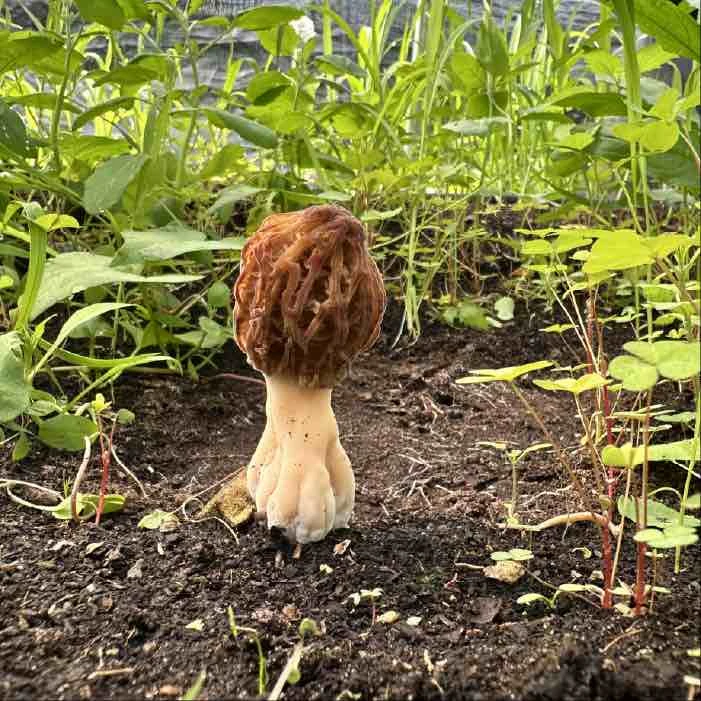
Can you really grow morel mushrooms? If you care to read no further, here is the answer in a nutshell: "Yes! But there are a lot of variables and it's far from a sure-fire success." Read on if we've piqued your interest.
The latest in the world of growing morel mushrooms
It is a challenging mushroom to grow, for sure. Morel mushrooms grow in most areas of the USA, so why on earth is morel cultivation still so difficult?
Let's take a step back, or rather, let's take a step accross the globe to China where they are ages ahead of us. How are they so successful while we here in the United States are still struggling? There are several reasons.
First, keep in mind that we're only seeing results from large farms or research companies. For every one of those companies that is successful, you need to consider how many are likely not. We have all likely seen the same 5 videos floating around the internet that show an abundance of morel in either hoop structures or trays. But naturally, we are never privy to videos of failed morel cultivation endeavours! For the companies that are successful, a lot of it is the result of aggressive agricultural research and rural revitilization programs, which is something we do not have here in America.
Secondly, due to aggressive research, China (and Europe!) have had vigorous morel strains that are just starting to make their way into the hands of US growers.
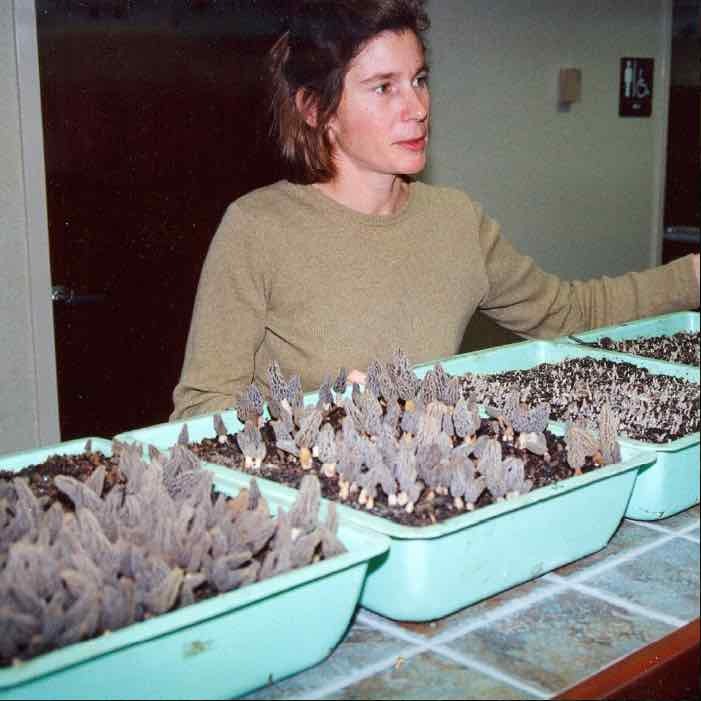
Field & Forest Products owner observing morels in the 90s
Morel Cultivation in the United States
So where does that leave us? Fortunantly, thanks to dedicated small growers and research programs at institutions like Michigan State, we're making strides in morel cultivation here as well. We now have two strains here at Field & Forest Products that have produced morel mushrooms. And while much around morel cultivation remains a guarded secret, methods on how to grow are surfacing.
Before you get started with your own morel beds, here are some things to keep in mind.
- New morel species are being tested all the time. How do you decide which to use? Find a source of a proven and mated strain and spawn. While we won't get into the science on this blog, take our word that having "mated" strains is incredibly important. Both our Landscape Morel and Black Morel are mated and proven to produce.
- Most people figure that because Morels are harvested in the spring, that’s also when you plant. However, Fall is in fact the best time to plant morels.
- Tools are almost essential to sheltering and stewarding the inoculated soil with materials such as shade cloth, drip hose and plastic tents.
- You’ll need to be around for a few critical weeks after planting in the fall and during harvest time in spring to monitor growing conditions. And when we say "be around" we mean, be prepared to not even take a long weekend away.
Despite the difficulties, there is not a gardening crop that is more welcome and exciting to get in April/May. The process is incredibly interesting and is open to your modifications as you progress. Here we share what has worked for us.
Growing Morel Mushrooms at Field & Forest Products
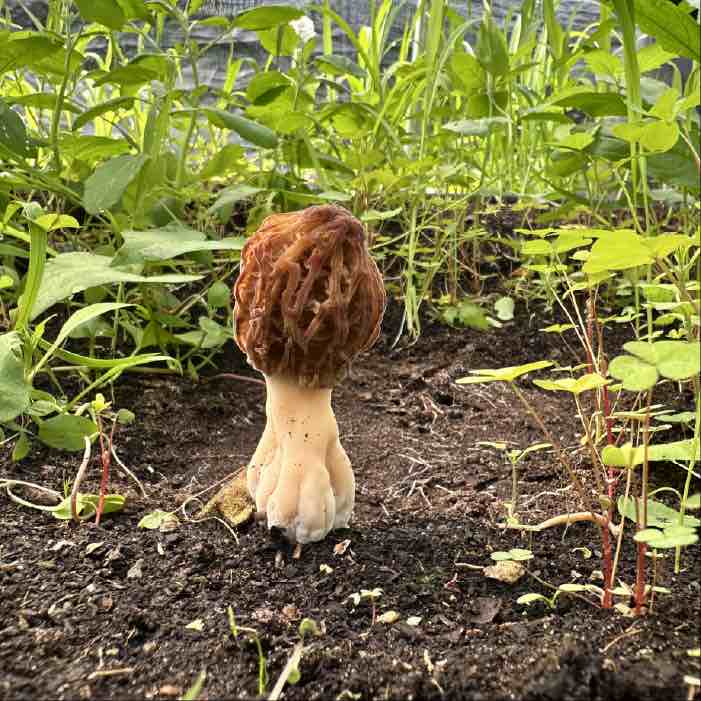
Morel cultivation at Field & Forest Products
First and foremost to consider is timing your plant. Planting time depends on your climate - aim for when daytime temperatures fall to 65-70°F. If you are using plastic tents or tunnels, keep in mind that temperatures can spike by 30-50°F when sunny, so using shade cloth and ventilating can help moderate temperatures.
Once you have an idea of your timing, continue as follows.
1. Prepare a 10ft by 3ft bed by working soil to at least 4 inches deep and edge the bed so it is slightly trenched on the sides. Water the bed well so the soil is moist. Let the bed rest for 2 days after watering to make sure the moisture has equalized throughout the bed.
2. Inoculate bed by hoeing a 4x4x4 inch trench down the center the entire length of the bed. Roughly break the spawn into 2-inch-diameter chunks and place in the trench. Cover with soil. At this point, spray the bed with soil bacteria booster (if using). Research in Europe stresses soil have proper amounts of bacteria to aid morel growth, so if you're unsure of the health of your soil, the Bacteria Booster is good thing to consider adding.
3. Set up your shade structure. Keeping your bed shaded and monitoring the environment is essential. You can create your own set-up with a raised bed and shade cloth (see an option for a morel bed set up here if you're using the Standard Morel Bundle) or view our Deluxe Morel Bundle which includes everything you need.
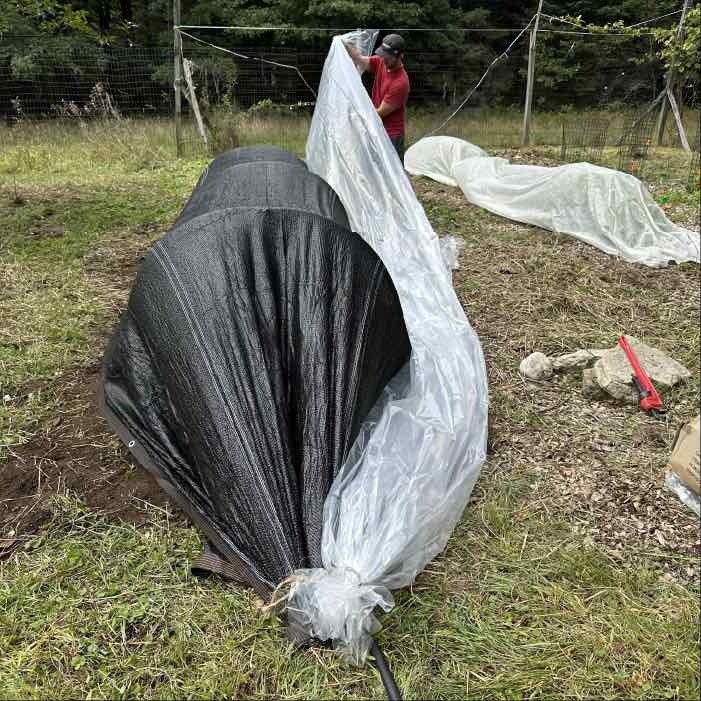
Setting up a morel bed structure at Field & Forest Products
4. Water bed to keep soil moist and watch for mycelium to surface (approx. 2-4 weeks after inoculation). We love the Sumisansui Mark II system for mushroom beds as it allows for even moisture. Keep in mind that at this phase, it's helpful to keep your bed covered with either plastic or a fruiting blanket to prevent it from drying out!. Once you see these mycelial mats (called conidial mats) place nutrient bags (exo bags) on bed.
5. Await Spring
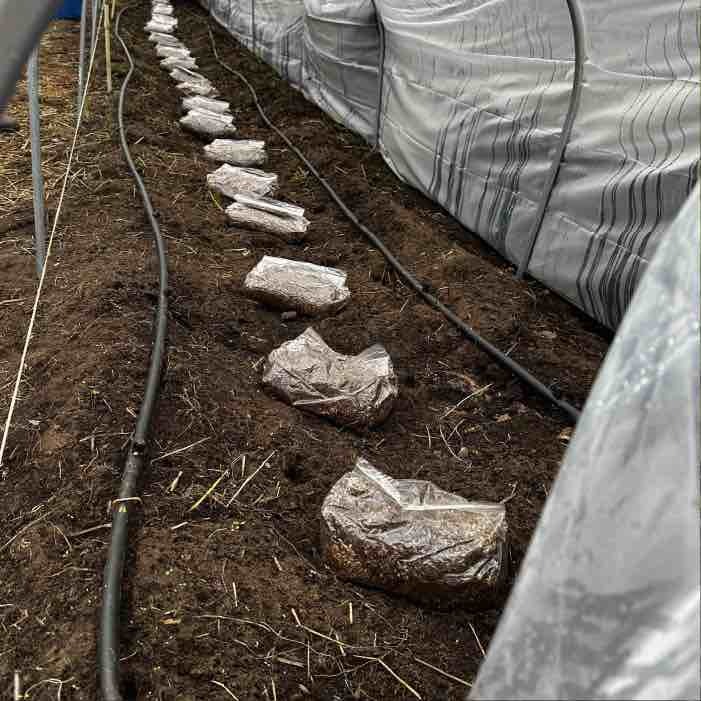
Exo bags on morel bed
Now, of course a lot happens with monitoring and controling the environment of your bed between steps 4 and 5. And rest assured, we do have more detailed instructions, but in effort of not having this blog run into a novella, we will wrap it up here, leaving you with the general idea of what needs to be done to try your hand at growing morel mushrooms at home. Happy growing!