
After inoculating mushroom logs, you have anywhere between 6 and 18 months before they start producing mushrooms. In the time between inoculation and your first fruiting, what’s the best way to stack them? This commonly overlooked detail is more important than people realize.
Below, we’ll cover the two best ways to stack logs outdoors after inoculation, but first, we want to discuss why stacking your mushroom logs in a specific manner matters.
The first 6 weeks after inoculating your logs are the most critical for proper incubation practices. During this 6-week period the moisture within the log is still ideal for mycelium growth into your log, and you want your mushroom of choice to be able to make the most of that environment and establish itself with healthy, vigorous growth. As the logs start to lose moisture, they become more vulnerable to other fungal organisms moving into the logs, so you want to ensure that the mushroom you inoculated has the upper hand in fighting any competitor organisms off. Keeping your logs stacked properly will allow them to maintain their moisture for as long as possible, giving your mycelium the best conditions for growth.
If you're placing in your logs immediately outdoors (indoor mushroom log incubation follows different rules) we suggest one of the two stacking methods below.
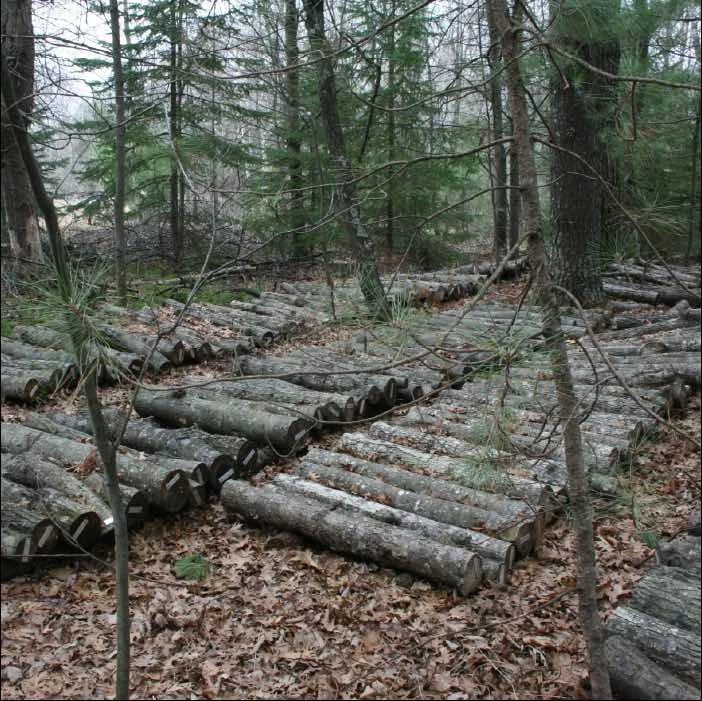
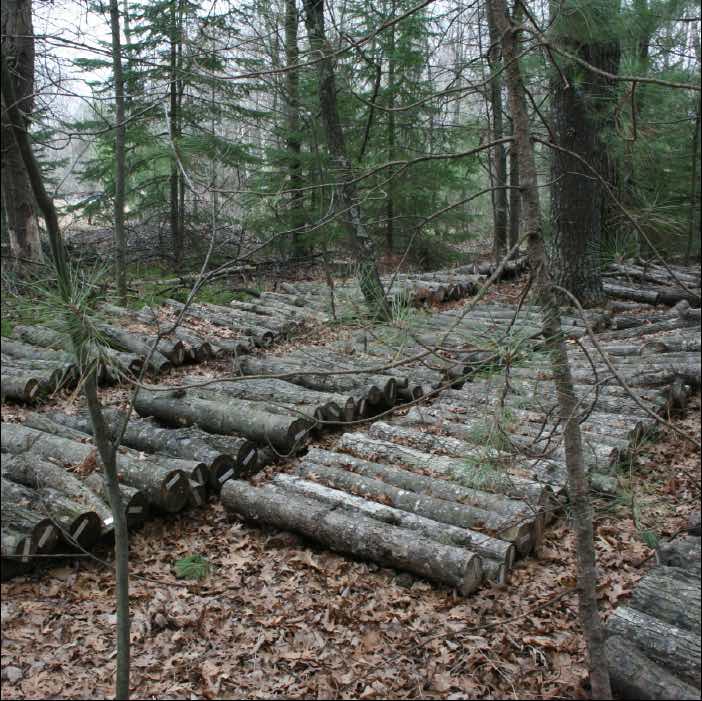
Low Stack: Or rather, no stack. This stacking method is as straightforward as it sounds! In this method, you lay your logs out in a single layer on either pallets or stringer logs to keep them off the ground. This method allows for equal distribution of moisture from rainfall or a sprinkler system and also keeps the logs low to the ground to prevent any drying from wind. However, this method requires a good amount of real estate, as it is space-intensive.
Low Crib Stack: If space is an issue, this method allows you to consolidate your logs into a tight criss-cross pattern stack. We recommend stacking the logs no higher than knee-height. While higher stacks may seem more efficient, the higher you stack the greater the risk for wind exposure, and also toppling logs!
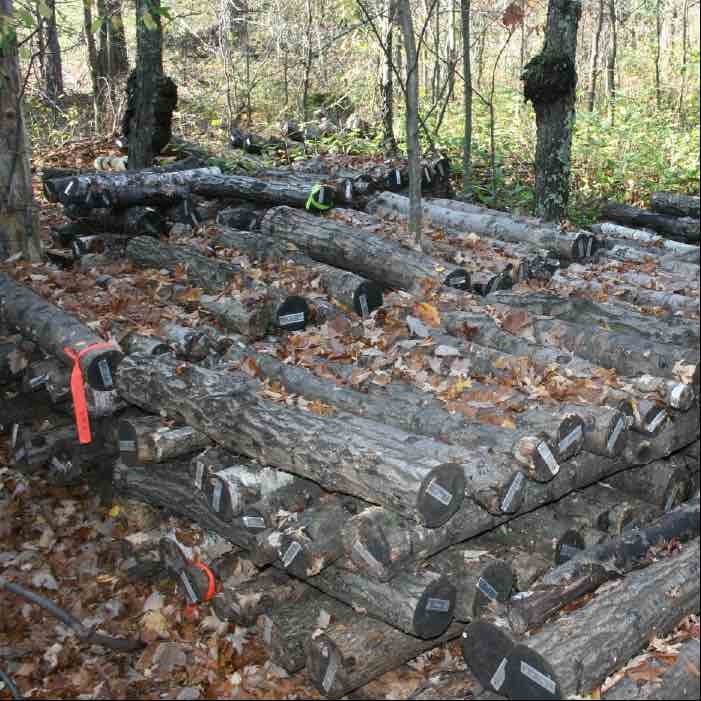
Later in the season or the following year, you will want to restack your logs into a fruiting configuration. Stacking configurations have the logs spaced further apart so that the mushrooms have room to grow. While stacking and restacking may sound time-intensive, it will give you more productive mushroom logs and the little bit of extra effort will go a long way.