
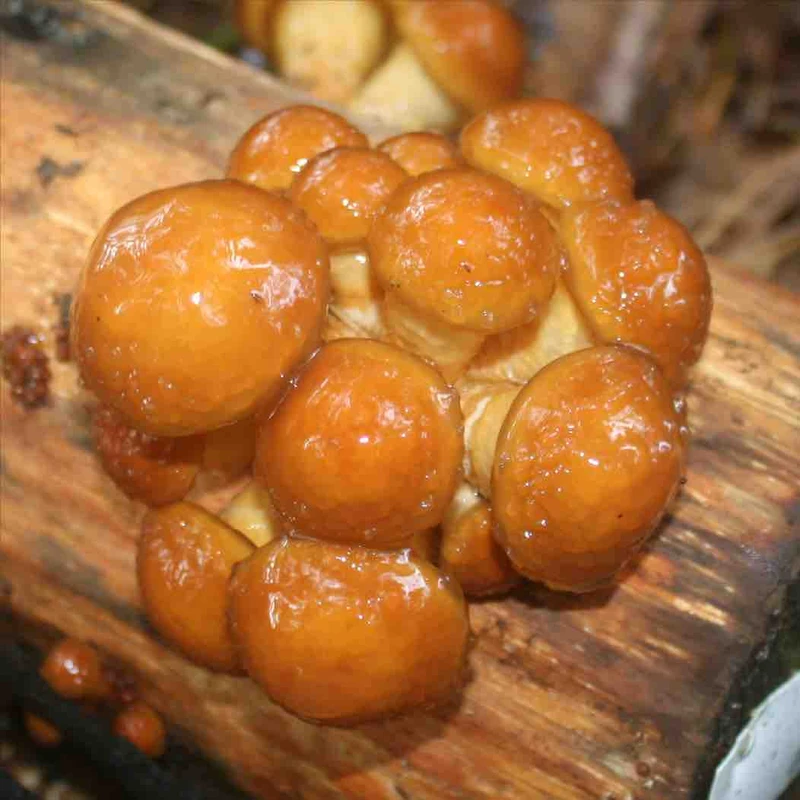
Nameko mushrooms are one of our favorite fall-fruiting mushrooms. With their orange, naturally gelatinous caps they distinguish themselves as one of the most unique mushrooms you can grow. While the caps have a tendency to scare some less adventurous folks away, culinary enthusiasts shouldn't hesitate to jump to try these! Let's talk about why you might want to grow nameko, how to grow nameko, and how to cook nameko.
Why Grow Nameko Mushrooms?
Have you ever seen nameko in grocery stores? Likely not. Nameko is a specialty mushroom that proves difficult to find fresh. Because of the natural coating to their caps most grocery stores hesitate to stock these mushrooms due to shelf-life concerns. So why grow nameko mushrooms? Because otherwise you may never find them! Which brings us to the discussion point - how to grow nameko.
How to Grow Nameko Mushrooms
You can grow Nameko on either sterilized sawdust blocks of hardwood logs. We find it far easier (and more productive!) to grow them on hardwood logs. To grow nameko on hardwood logs, treat the planting process as the same way you would plug oyster or shiitake logs. Source fresh logs, drill holes all the way around the log, and plug the holes with either nameko plugs or nameko sawdust spawn. If you're unfamiliar with the process you can read step-by-step growing instructions on our How to Grow Nameko on Logs page.
But after planting there are some rules that are slightly different than other mushroom logs. Most mushroom logs we keep elevated off the ground on either pallets or stringer logs. With nameko logs, keep them directly on the forest floor on a bed of leaves or pine needles as seen in the photo below. Nameko thrive in cool and humid conditions and keeping the logs directly on the ground helps maintain ideal incubation parameters.
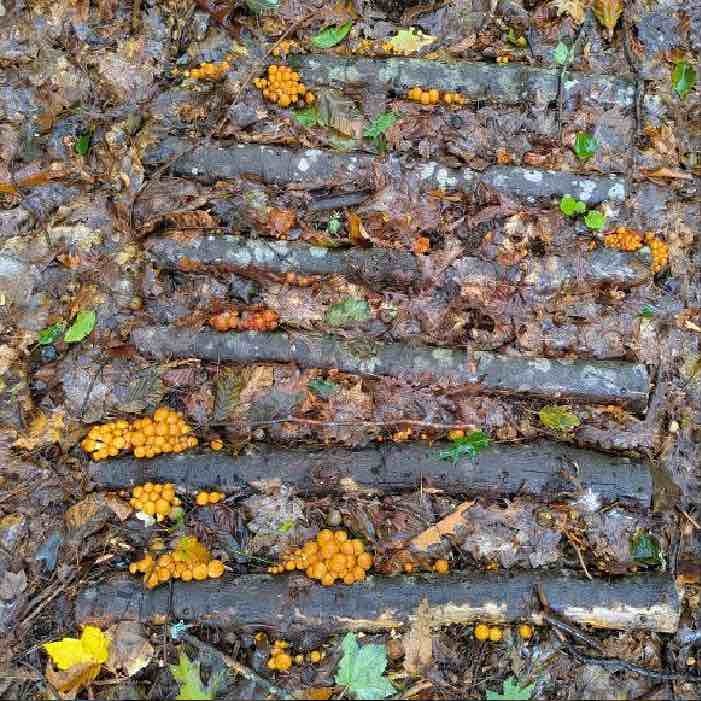
Photo courtesy of J. Dochtermann in Maine
Citizen Scientist Highlight
How do you Cook Nameko mushrooms?