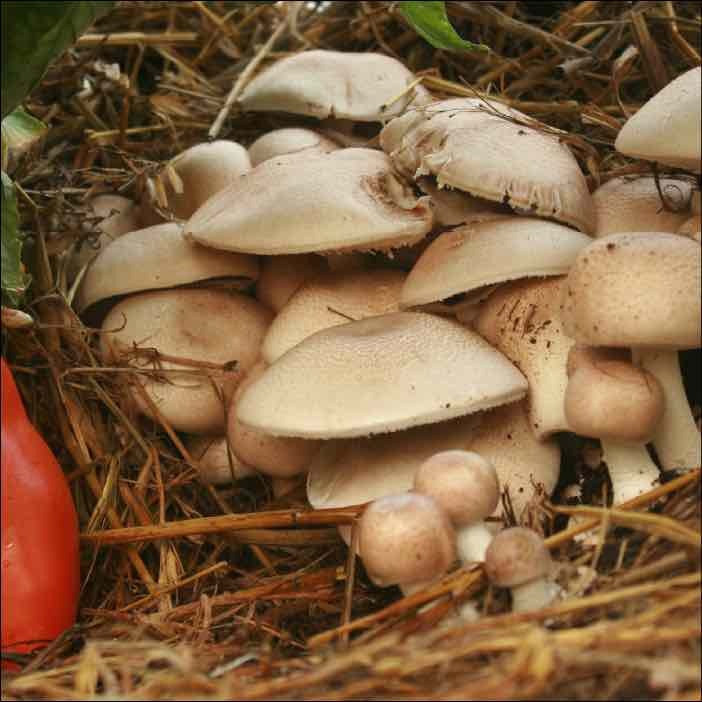
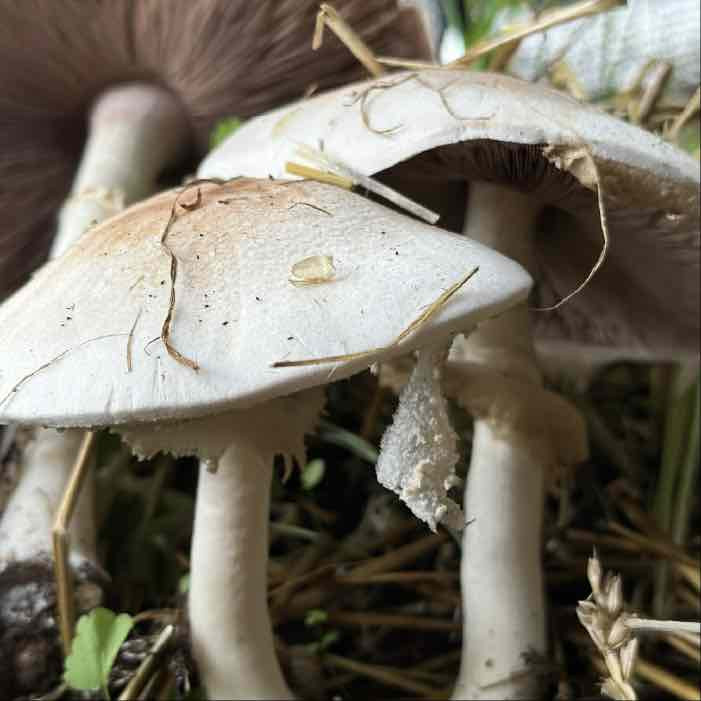
Almond Agaricus is a phenomenal summer mushroom, but it can be tricky to grow. Using fully finished compost and managing your moisture is critical to success. Here at Field & Forest Products, we grow our Almond in a greenhouse or shaded outdoor structure that can stay watered (we use shade cloth over low hoops with a sprinkler system). We're currently working on a video that shows exactly what we do, but in the meantime, here are four growth stages you can look for in your own Almond bed.
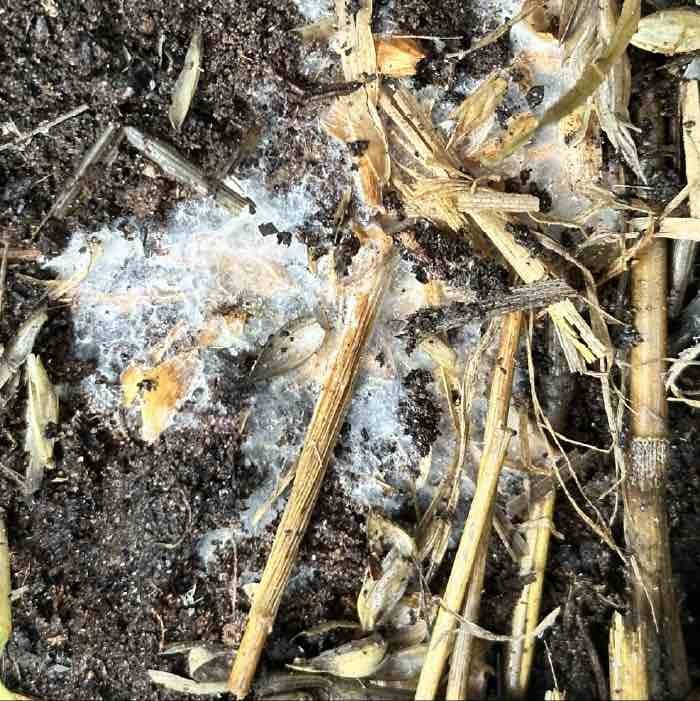
Stage 1: Surface Mycelium
If moisture is optimal at the mushroom bed surface, the Almond agaricus mycelium will grow up and appear as a fine white film in patches across the bed. It is more likely that you will see this when you use a light straw mulch over the surface of the bed to ultra-localize moisture.
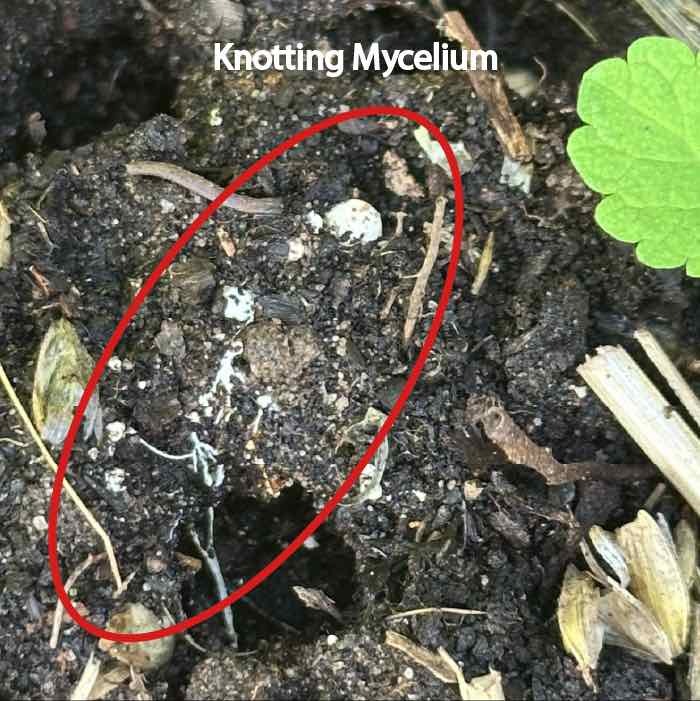
Stage 2: Knotting Mycelium
The precursor to pinning. This is a matting or knotting of mycelium into what may become pins. Not all of the knots will make it to becoming true pins, but this is a great stage to look for to assure you that your mushrooms are on their way!
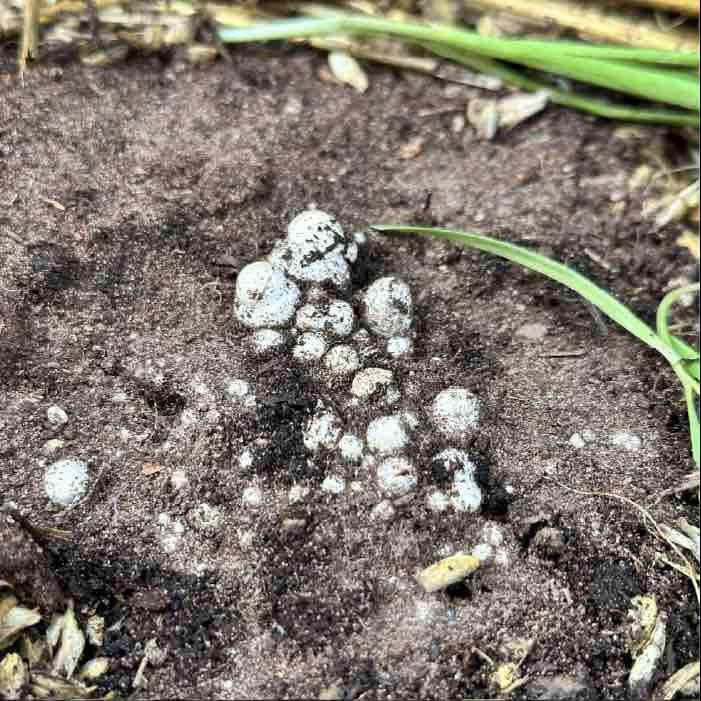
Stage 3: Almond Agaricus Pins (or Bubbles)
A sign that you're almost to your first harvest! Almond agaricus pins appear by "bubbling" to the surface of the bed. Before they start to look like mushrooms, the pins look like little white bubbles.
Stage 4: Harvest
Once you see your mushroom pins, getting to this stage should be a breeze- just let the mushrooms grow! Ideally harvest before the delicate, ornate veil breaks away from the stem, but mushrooms will become more flavorful the larger they get. Keeping your bed moist will allow mushrooms to emerge for the remainder of the summer after brief rest periods - keep an eye out!