null
Citizen Science | What can I grow on Bradford Pear?

Citizen Science | What can I grow on Bradford Pear?

Apr 22nd 2026

Full credit for this project and article goes to our citizen scientist, Adam, from New York. Adam served as a shining example of the best of citizen science. Read his article below on growing mushrooms on Bradford Pear.

Callery Pear Mushroom Trials - Growing Wine Cap & Chestnut

Project Background: Callery pear (Pyrus calleryana), aka Bradford pear, is a fairly common non-native ornamental mid-size tree that has been widely used in landscape plantings due to their fast growth and hardiness to varied soils. In the northeast US they seem to be particularly popular in shopping center parking lots. Converting this nuisance tree into decomposed rich soil amendments and a pile of tasty mushrooms is the goal.

PART ONE: Pyrus calleryana ramial chips inoculated with Stropharia rugosa annulata

Project Description: Ramial branches, between 0.5-1.5” diameter, of three medium-sized Callery pear (Pyrus calleryana) were chipped using Harbor Freight electric leaf and branch shredder in the spring of 2023 (chipped over several days April 5-13th, trees felled March 25, 2023). Main leaders and trunk were set aside for chestnut mushroom inoculation (see below for more).
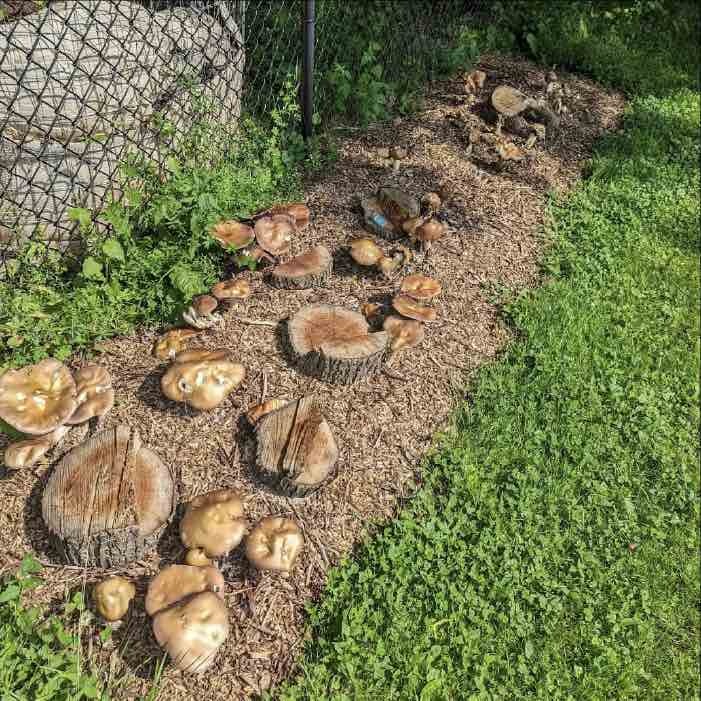
Bradford Pear chips were spread and inoculated with Wine Cap sawdust spawn in two areas, one in a heavily shaded area at the edge of a small woodlot, the other along the edge of an open lawn that gets direct afternoon sun (3-5 hours). The chips were wetted while being spread to approximately 6-8” deep on top of a single layer of heavy plain corrugated cardboard. A few pieces of cut-offs from the pear tree were placed on top of chips to offer microclimate variety and help moisture retention.
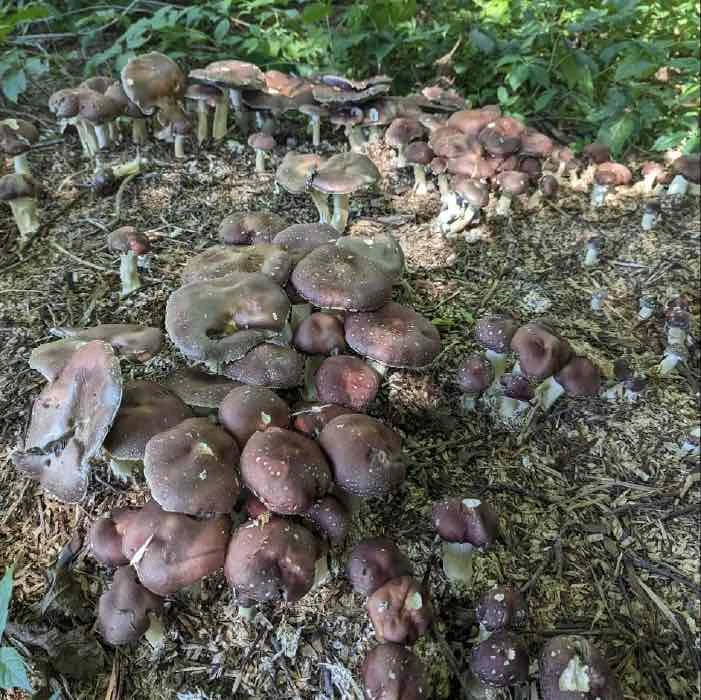
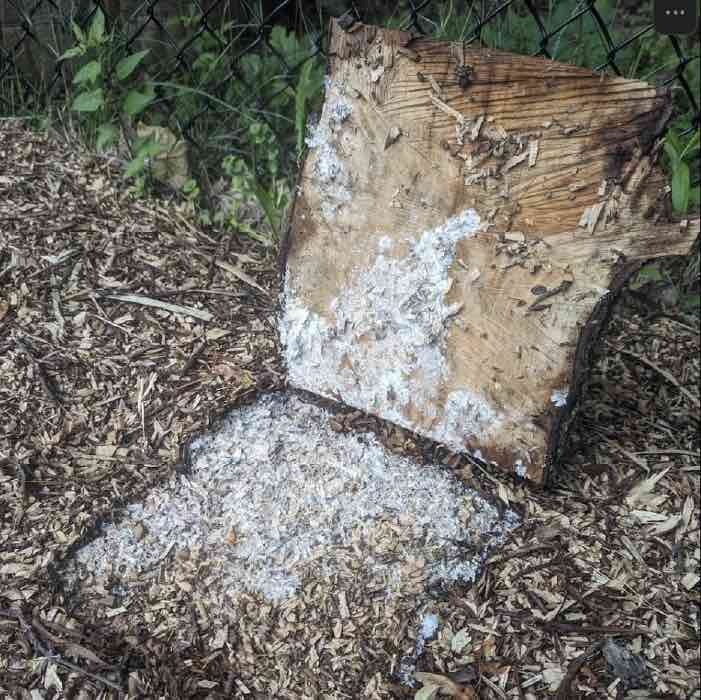
Results: Within weeks, mycelium was observed below the surface of the wood chips in both patches. Thick growth was observed on the underside of the large wood pieces (see photo) within the patch on the lawn edge and by mid June and a full flush of Stropharia was observed two weeks later. Unfortunately, there was also a large set of fly larvae as well. Much of the harvest was discarded. Others that exhibited obvious larval damage were left to finish fruiting. Slugs were an issue as well.

Wine Cap mycelium on bradford pear chips

Garden Giant mushrooms growing on bradford pear

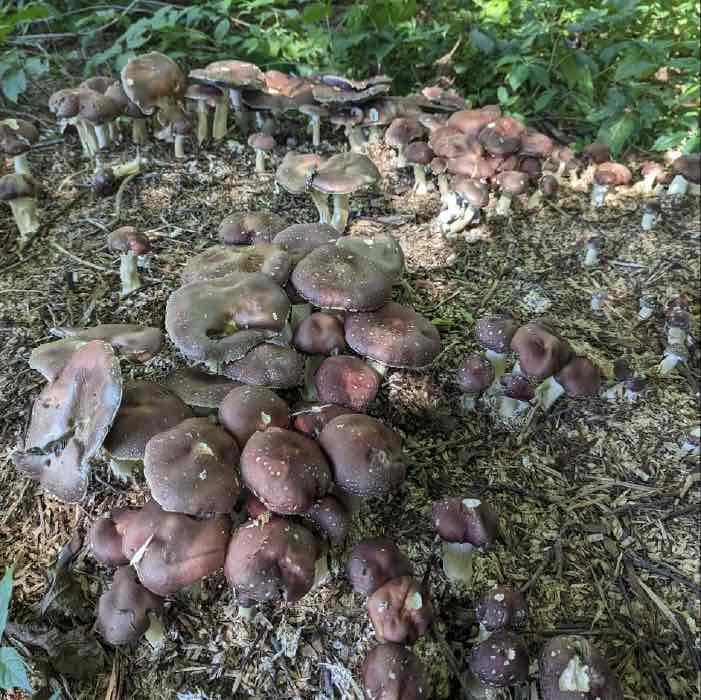
Approximately one month after the sunny bed fruited, the shade patch had a very robust flush, which produced several pounds. These mushrooms were a bit cleaner but still suffered from some damage as well.

Wine Cap mushrooms growing on bradford pear chips

Other Observations: The patch in the sun was quicker to fruit but provided roughly the same biomass as the shade bed by producing fewer but larger fruits. Unfortunately, both beds were impacted by maggots and slug damage with roughly 70% lost, but the yield was still impressive. There was some limited fruiting a year later in both remnant beds but for the most part, the wood chips were consumed pretty quickly and decomposed into a nice, tilthy compost. Excess unchipped branches from the same trees, piled nearby remain mostly intact and undecomposing, which may demonstrate the lack of native decomposers of callery pear and highlights the ability for stropharia to rapidly consume this species.

PART TWO: Pyrus calleryana and Chestnut Mushrooms

At about the same time the Stropharia were inoculated in the chips, sawdust spawn of chestnut mushroom was inoculated into the lower trunk sections of the same trees. Holes were drilled at about 4-6 inch spacing, packed with spawn and sealed with wax. The logs were laid in full shade on top of uninoculated off-cut branches to keep the inoculated logs from being in direct contact with the ground. Leaves were piled around the logs, providing some protection but not covering the logs.

Results: Nothing yet… After a full year and a half since inoculation, no signs of a successful inoculation within the logs. Recently, there has been some white fungal growth showing signs of surface growth but this looks to be typical ‘white rot’. Seems that Callery pear may need more investigation to determine if it is in fact not suitable for Chestnut mushroom cultivation.

Products In This Article