
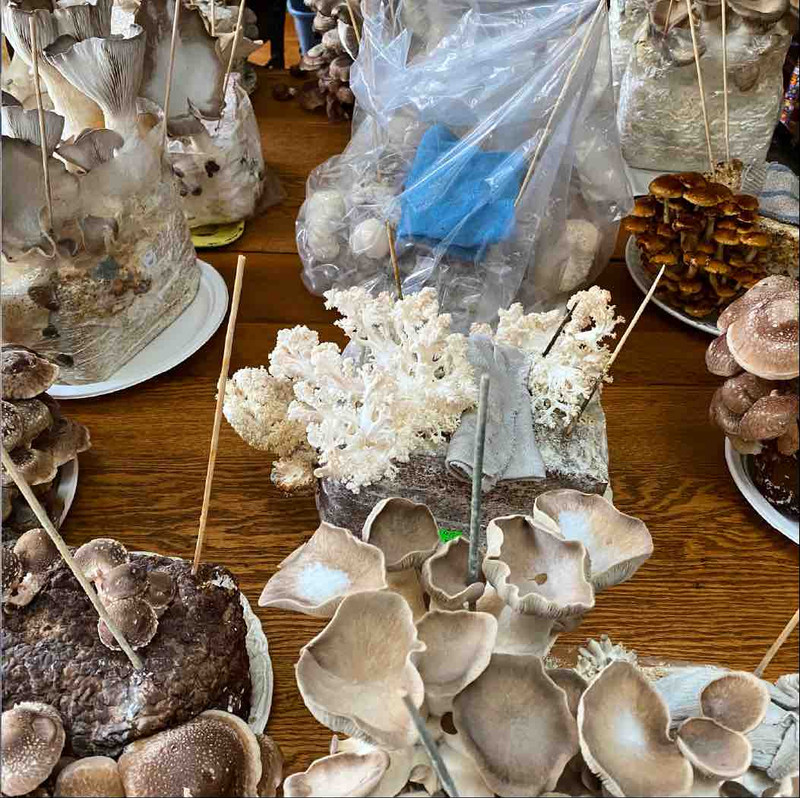
When growing mushrooms from Table Top Farms or ready-to-fruit blocks, growers new to the process are often faced with the troublesome trio: humidity, CO₂, and harvest time. Let's cover how each of the three can look!
1. Low Humidity (or too high!)
Low humidity can cause cracked caps, lightweight mushrooms and general withering. Many households have a relative humidity of 30% or even less. You know that you have good humidity for growing mushrooms if you have droplets of condensation on your windows regularly in the cold months, but that is not a great condition for your house to be in!
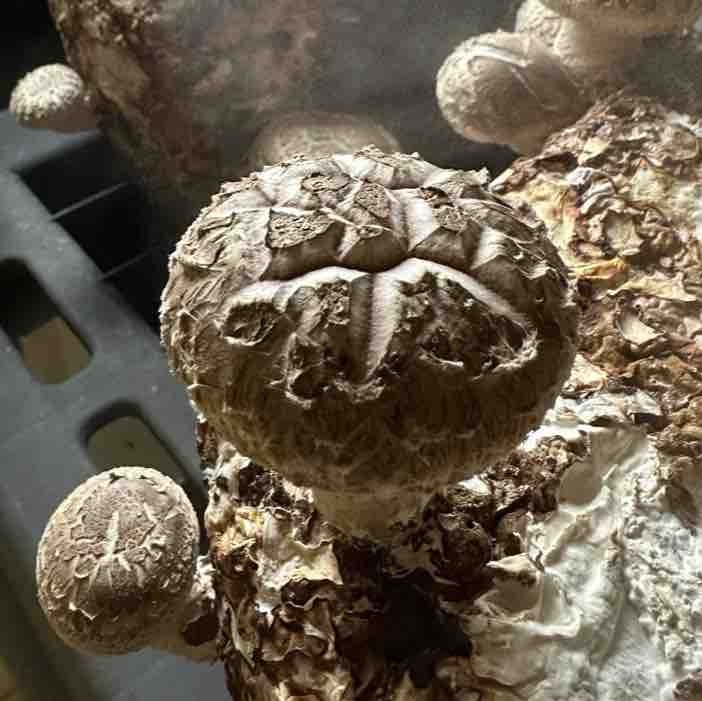
Cracked caps as a result of low humidy
The trick is to localize humidity without trying to keep the mushrooms wet. A lot of water droplets on the mushroom can create prime conditions for Blotch, or Pseudomonas, a common bacteria that can infect and deteriorate the mushroom pins before or while it grows. An easy way to localize humidity and prevent water droplets is to tent your farm with a large plastic bag, holding it up with skewers to create a little humidity dome. Which brings us to point #2!
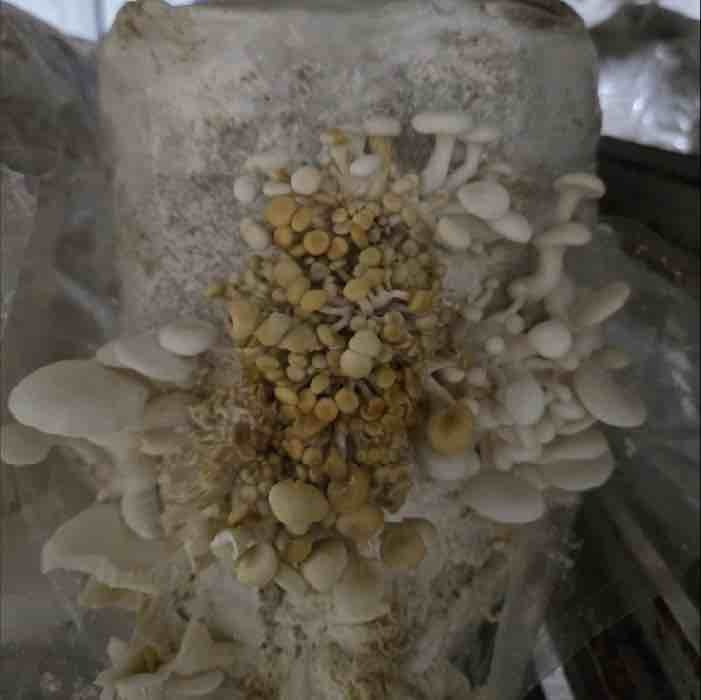
An extreme case of blotch on oyster mushrooms.
2. High CO₂
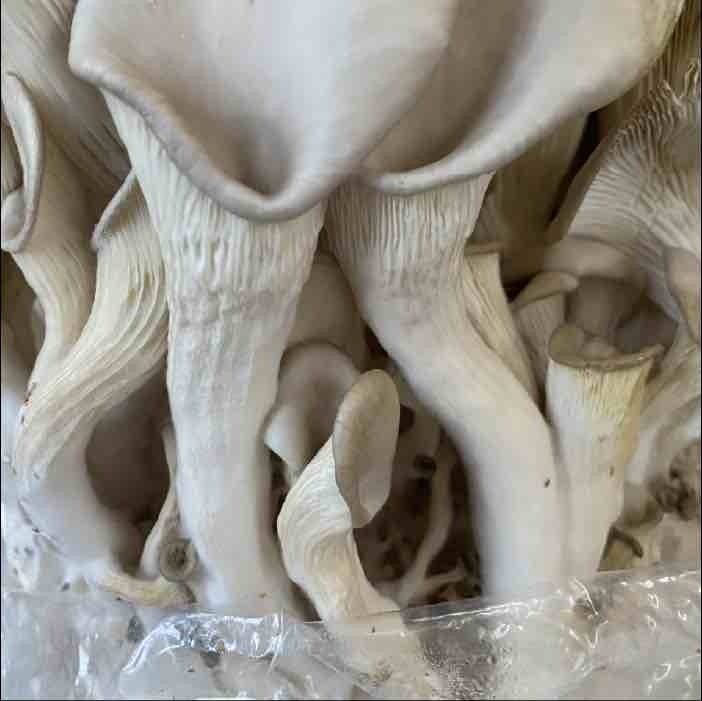
High CO2, causing elongated stems and other malformations. In our effort to rein in the humidity during our dry winter season, we put the blocks into tents or under plastic bags or sheets to keep humidity localized. The problem is that while we can trap humidity this way, we also trap CO2. Much like humans, mushrooms take in oxygen and put out CO2. The result is long stems and malformations as the mushroom cap strives to escape the high CO2 environment. Oysters look like long vases or antlers and lion's mane can be so branchy they look like coral tooth mushrooms. Solution: cut holes in the bag or loosely tent plastic sheeting and regularly lift it up to vent. Larger "grow tents" can be particularly difficult to control so start with individual bags or loose plastic sheets.
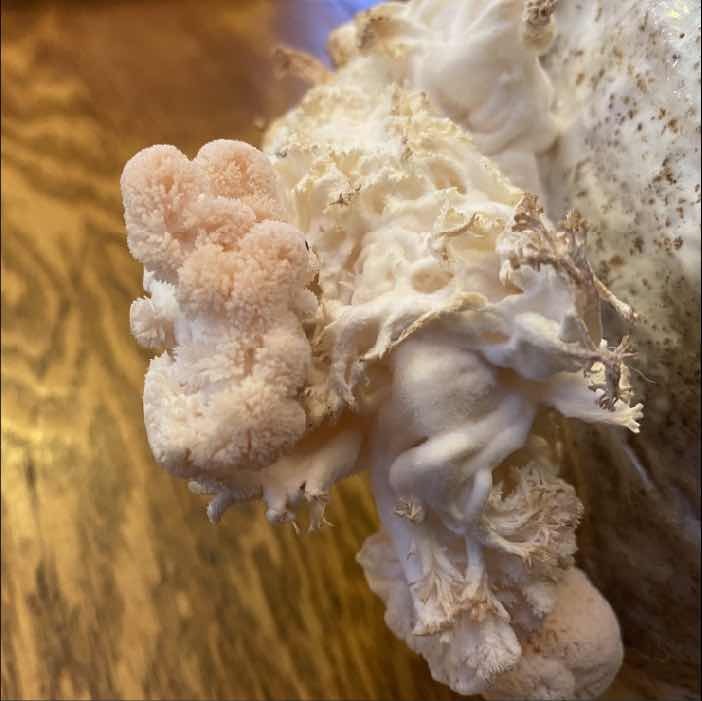
3. Choosing the Right Time to Harvest
Each mushroom has a different prime harvest stage, not necessarily related to size. While wood decay fungi (almost all the Tabletop farms we offer) do not get more flavorful with age, we often like to grow them to as large of a size as possible. For longer shelf life in the refrigerator after harvest and a beautiful looking mushroom slice both in and out of the pan, try to harvest them before the spores drop. Usually this is before the cap flattens out completely and there is still a bit of a curl at the edges. For mushrooms with spines like Lion’s Mane, once the mushrooms start to yellow on the top, the spores have usually dropped and the mushrooms become leathery and slightly bitter. See the videos linked here for guidance on When to Harvest Shiitake, When to Harvest Oyster Mushrooms, and When to Harvest Lion's Mane.
As always, we have real people here staffed to answer a phone call or email. If you have questions, don't hestiate to reach out!