
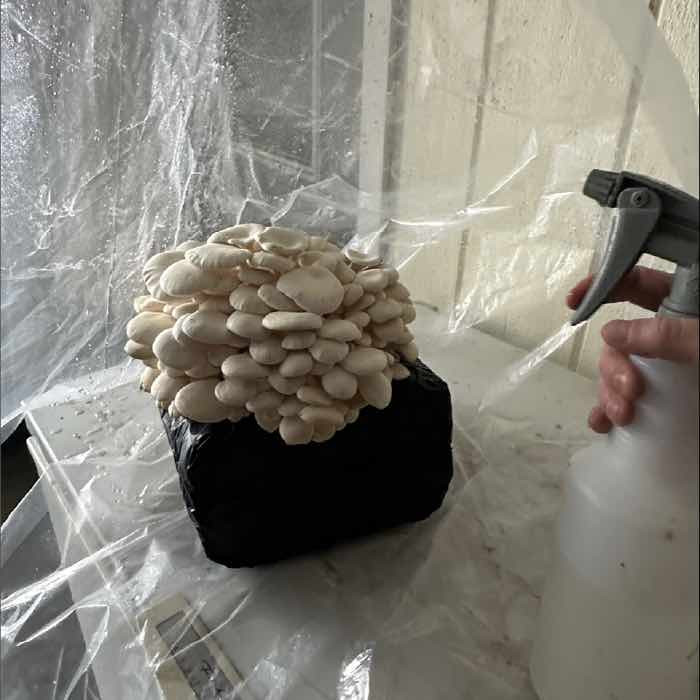
Table Top Farms and ready-to-fruit blocks give us an education of how different mushroom types can be from one another and how we cultivators must learn to adjust!
Because most of us do not have high-tech environmental controls installed in separate rooms in order to accomodate different species, we use simple manipulations to encourage the most yield regardless of location.
Trick #1: Arm yourself these common household tools to get close to conditions commercial growers aim to achieve in a grow house. We'll cover how to use them as we get further into the blog!
These are :
- Large plastic bag
- Scissors
- Metal or wood appetizer skewer, rubber band and square of terry or microfiber toweling
- Ultrasonic home humidifier
- Supplemental light (incandescent or LED bulb)
- Home refrigerator
Trick #2: Mitigating Low Humidity
The biggest challenge home growers face? Providing enough humidity for the developing mushrooms throughout the entire grow. Most homes, especially in the winter, have low humidity. When the Table Top Farms come to you, the mycelium is charged with water from the incubation phase, so getting them to pin is easy. But, as the mushrooms develop, they use up the water and even shed moisture, so adding extra water will give you the best final quality. There are several tools you can use to provide extra water to help the mushrooms thrive in the grow out phase:
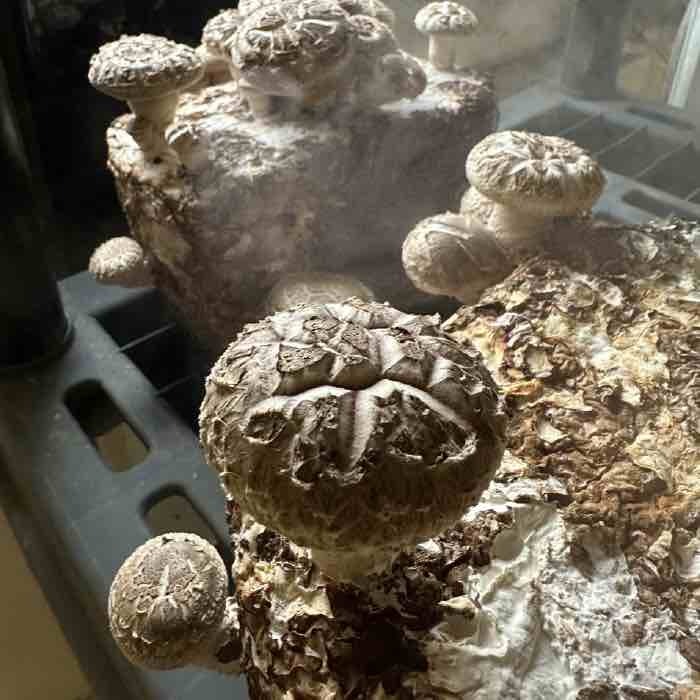
1. Home mist ultrasonic humidifier: This household appliance, while not the most economical tool we list here, is great for mushrooms where the whole surface of the block is exposed, such as shiitake. Paired with a thin, clear sheet of plastic tented over the humidifier and block, you can have constant humid air with plenty of fresh air exchange. The shiitake in the photo started pinning with no supplemental humidity at 30%RH, so adding the humidifier saved the day!
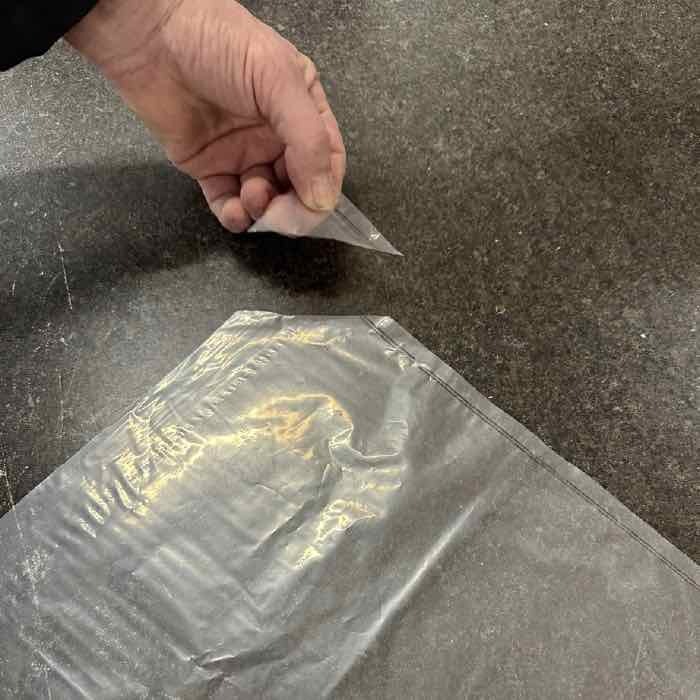
2. Large sheet of plastic or plastic bag: Draping a plastic bag over a pinning kit can capture the humidity that already exists in the block, but evaporates as the mushrooms grow. If the bag is large enough, just tenting the block with the bag is effective but the tighter fit (vs a tented sheet of plastic) will need some adjustment for airflow. Using scissors to cut corners from the bottom of the bag before covering your farm will allow for the necessary air flow.
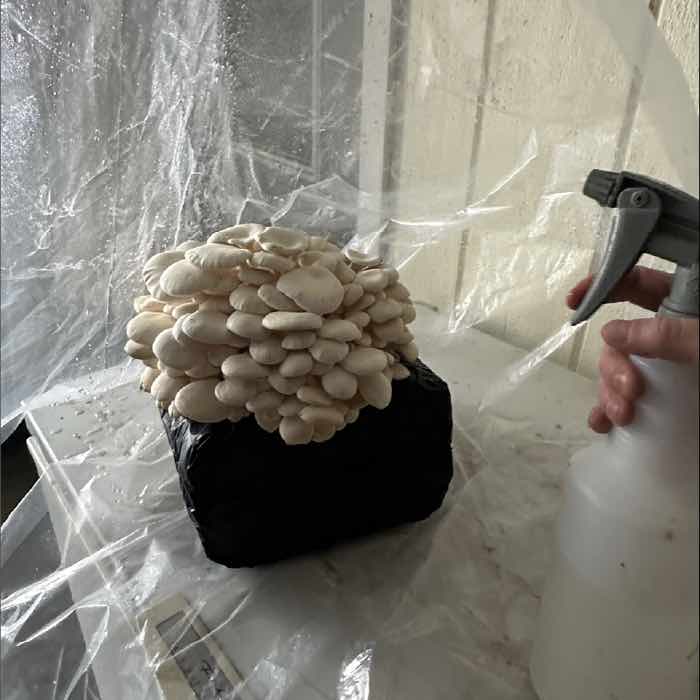
Adding supplemental humidity as the mushrooms grow and shed moisture through respiration helps keep the quality. Spritzing the inside of the plastic bag (not necessarily directly on the mushrooms themselves) keeps the surface of the mushrooms fresh and succulent while boosting humidity. A fine film of water droplets on the inside of the plastic throughout the entire phase is a goal. Using a plant mister (or rinsed and repurposed windex-style spray bottle) instead of a humidifier works well but must be sprayed a few times a day for best results.
3. Wooden or metal skewers: Skewers can be used to two purposes. First, skewers can be used to prop up the plastic bags or sheets. This creates humidity "pockets" and prevents the plastic from draping down and saturating the mushrooms with too much water from plastic-on-mushroom contact.
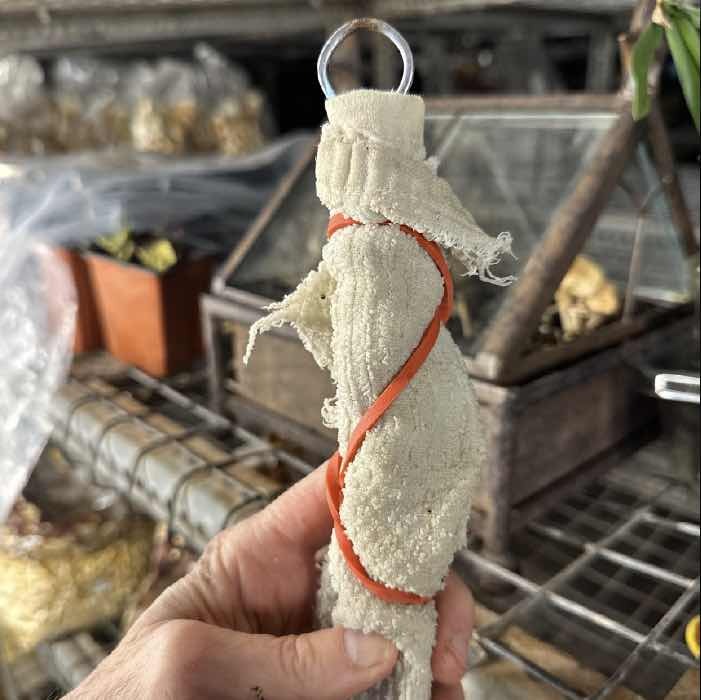
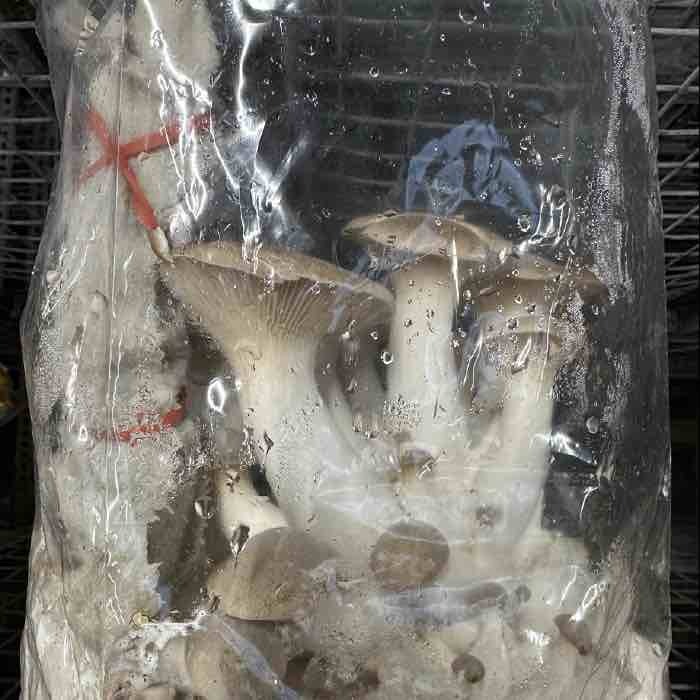
Skewers can also be wrapped with terry cloth or microfiber towels. These “humidity socks” are surprisingly effective but only for blocks that are tented or surface fruit on the top, such as King, Back Pearl, Reishi or Pioppini. The instructions with these kits recommend cutting the plastic bag off only at the very top because the filter patch bag itself is excellent at keeping the humidity localized. These varieties can also tolerate high levels of CO2 which works great with the high bag cut which doesn't allow for much air exchange. Simply wrap a square of towel around the skewer, fasten it with a string or rubber band, soak it in water and plant the sharp end into the top of the kit. Usually the cloth will only need soaking every other day and dispenses humidity slowly and evenly.
Trick #3: Adding Supplemental Lighting
Supplemental Lighting: Mushrooms need minimal light to fruit but reishi is an exception! A single lamp with bulb or LED lighting strip can meet the need. The strip light in the below photo is to the left and you can see the mushrooms reach for the light!

Trick #4: Pay Attention to Fruiting Temperatures
Finally, while this is not a trick of either light or humidity, it's worth mentioning. Keep in mind that some of the mushroom species pin best (and sometimes exclusively) in the cool. These would be King Oyster and Black Pearl. We ship these directly out of our cooler at Field and Forest Products so as long as they are placed in a room below 65°F they should pin beautifully. Holding the blocks in a cool environment (your refrigerator!) if there will be a delay in setting them up is essential.
Enjoy the gift of mushrooms and also the learning that comes with it!