
There are several ways to check your logs prior to inoculation to ensure success. Learning these indicators can allow you to begin with good, healthy wood before you spend the time and money inoculating a log that will rarely or even never produce mushrooms. All of these indicators can be seen by being observant of the condition of the wood that you are planning to use for your mushroom logs.
Check 1: Moisture Content
The first and most obvious thing to check for is moisture content. If you have handled a lot of logs you can pretty much tell how green (and not overly dry) it is. If the log is really light in weight compared to others of similar size when you heft it, you need question the overall health of the wood. A light log may indicate the wood was already dead when you cut it. A light-weight log can also indicate over-drying and the condition can be corrected. Check the ends of the logs. If they are cracked enough that you can slip a dime into the crack, soak the logs for 24-48 hours before inoculation to rehydrate them.
Check 2: Sapwood Health
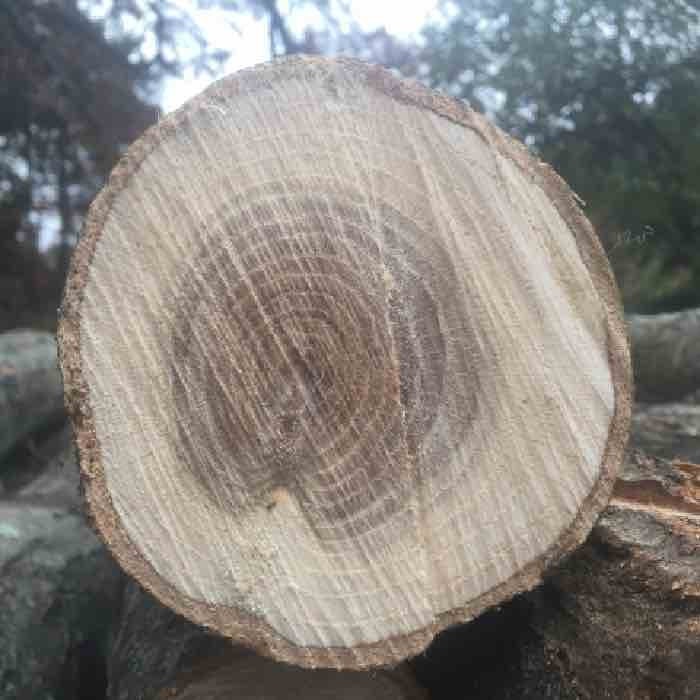
Next, assess the sapwood of your logs. Sapwood health can be checked while drilling into the logs. Sapwood is important as it provides nutrition of early spawn run and also is a great indicator of the future productivity of the log. As you can see here, the inner wood is bright beneath the bark, indicating a healthy log. A healthy log will be relatively heavy with a continuous ring of light-colored, nutritious sapwood.
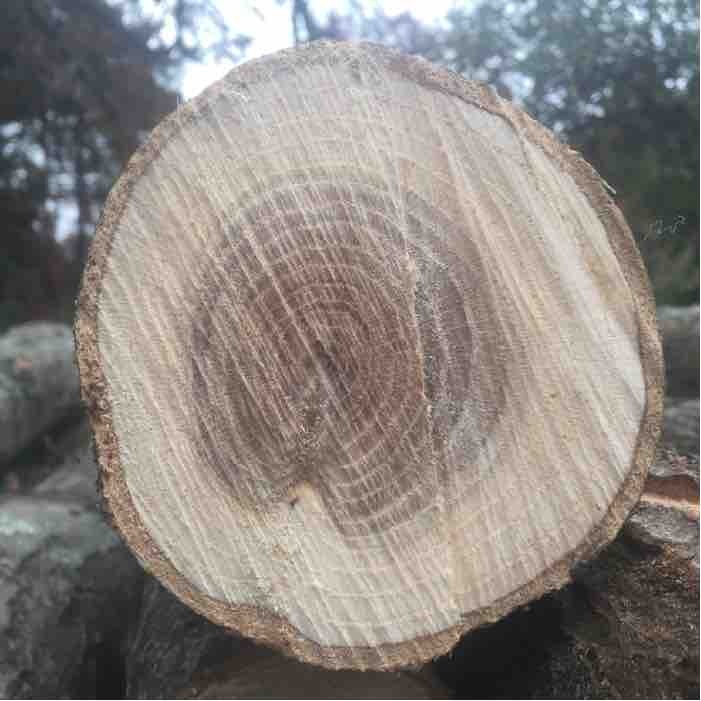
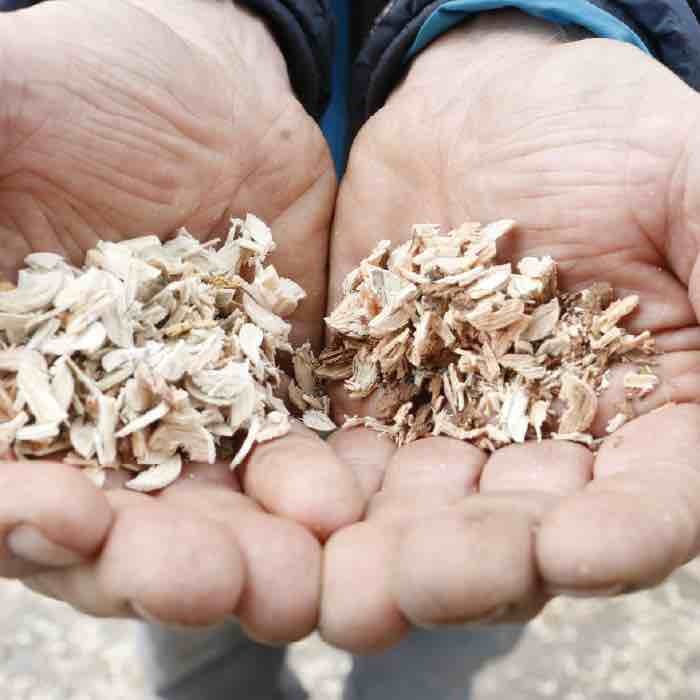
If the sapwood layer is starting to disappear it suggests a decrease in health and thus results in decreased yields. Sometimes only a part of the log is dead and you can see the areas by examining drill-outs while drilling. Darker drill-outs indicate dying wood (right side of the photo below). If most if the drill outs are bright white (left side of the below photo), heavily inoculate the areas around the margins of the pockets of possible dead wood to ensure the spawn can overwhelm any diseased portion, or simple follow the rule: "When in doubt, throw it out".
Check 3: Bark Health
Finally, check the outer bark health. The bark where the end of the log is beginning to separate from the wood will give you a preview to potential problems. Small cracks emanating from the outer bark surface inward indicate uneven drying or curing and can serve as channels for contaminants. Loose, black speckled or dull can indicate that the bark isn't completely set on the log and is even possible to peel off. You can observe all of these problems in the photo below. Opt not to use logs like this!
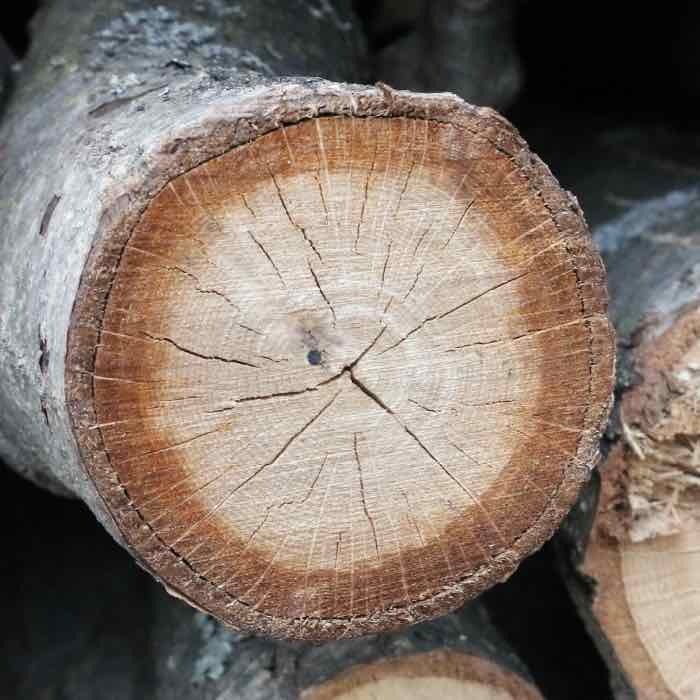
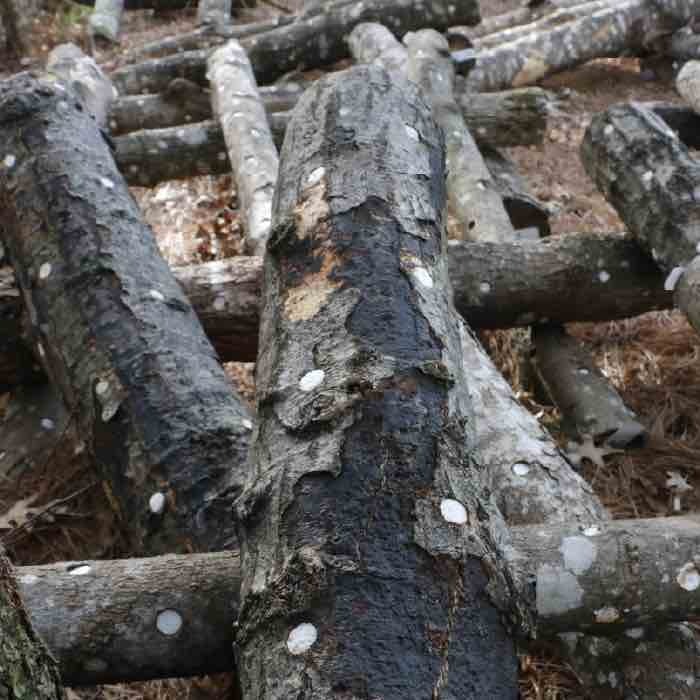
One final thing to keep an eye out for are a complex of diseases including Hypoxylon, Diatripe and Graphostroma. These diseases are ubiquitous and often present in low concentrations in many living trees, but will take off as a threat to the mushroom mycelium if the logs are exposed to prolonged warm and sunny conditions after felling before inoculation.
The figure below shows a typical log infected with hypoxylon. These logs will still fruit but the yield will be low, so it bears the question if it's worth the effort.
Just remember that you're putting a lot of effort into inoculating logs, so it's best to start off with the best possible logs. If you have any questions don't hesitate to reach out to us- we are only as successful as you are!
Video: Are my Mushroom Logs Healthy? Three Checks Before you Inoculate.
Related Videos: How Long can I Store Logs Before I Inoculate?
Keep in mind... Logs that are freshly cut from a healthy, living tree in its dormant state will always yield best results! Other logs may be used, but temper expectations as far as productivity of the logs.